Hi everyone,
I’m Mj, founder of Kalp Yantra AI & Technologies — an AgriTech startup based in Gujarat, India. I’ve been building and running a custom FarmBot Genesis 1.2 system for the past several months, and figured it’s about time I shared what I’ve learned with this community.
The Setup
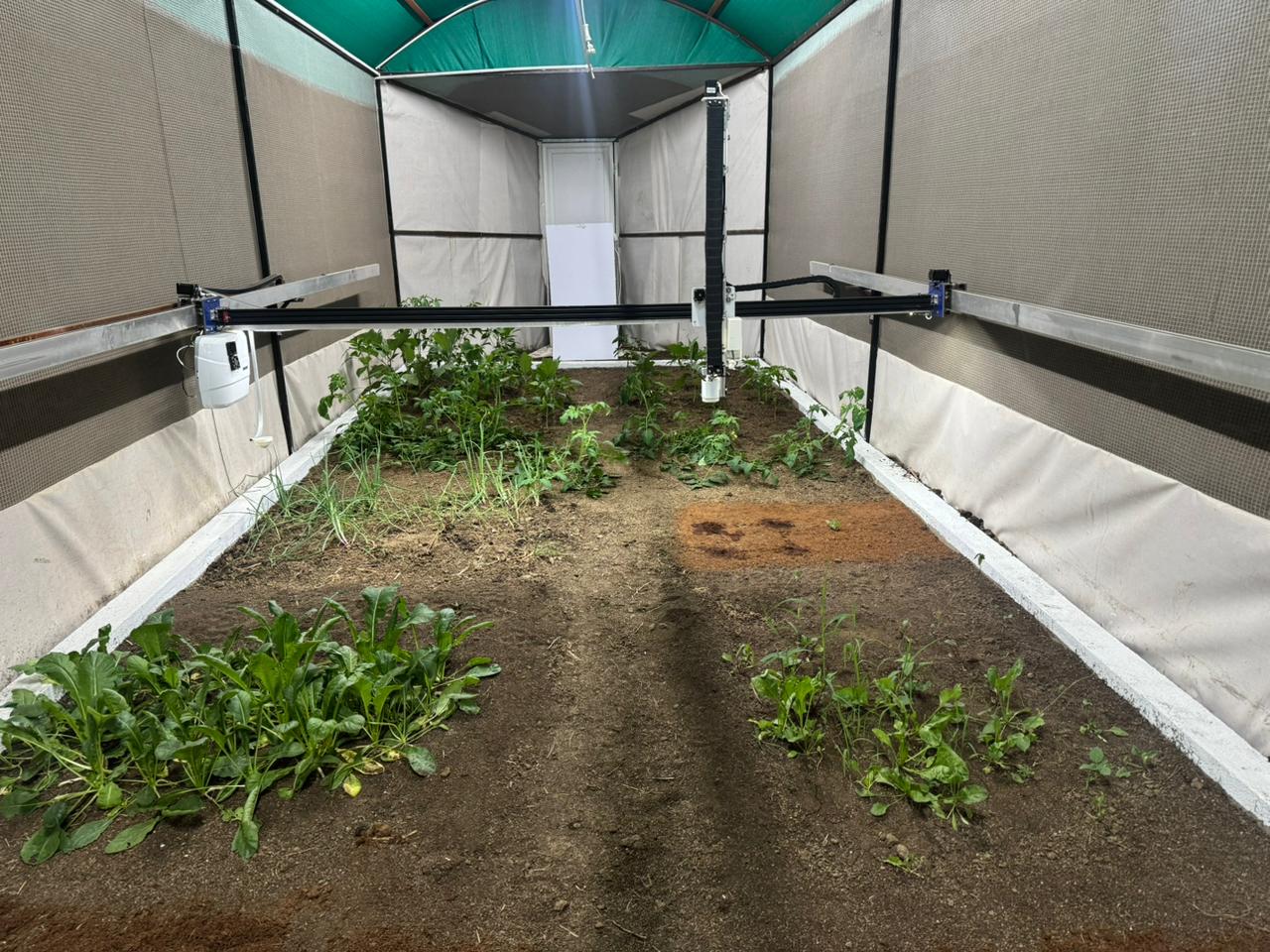
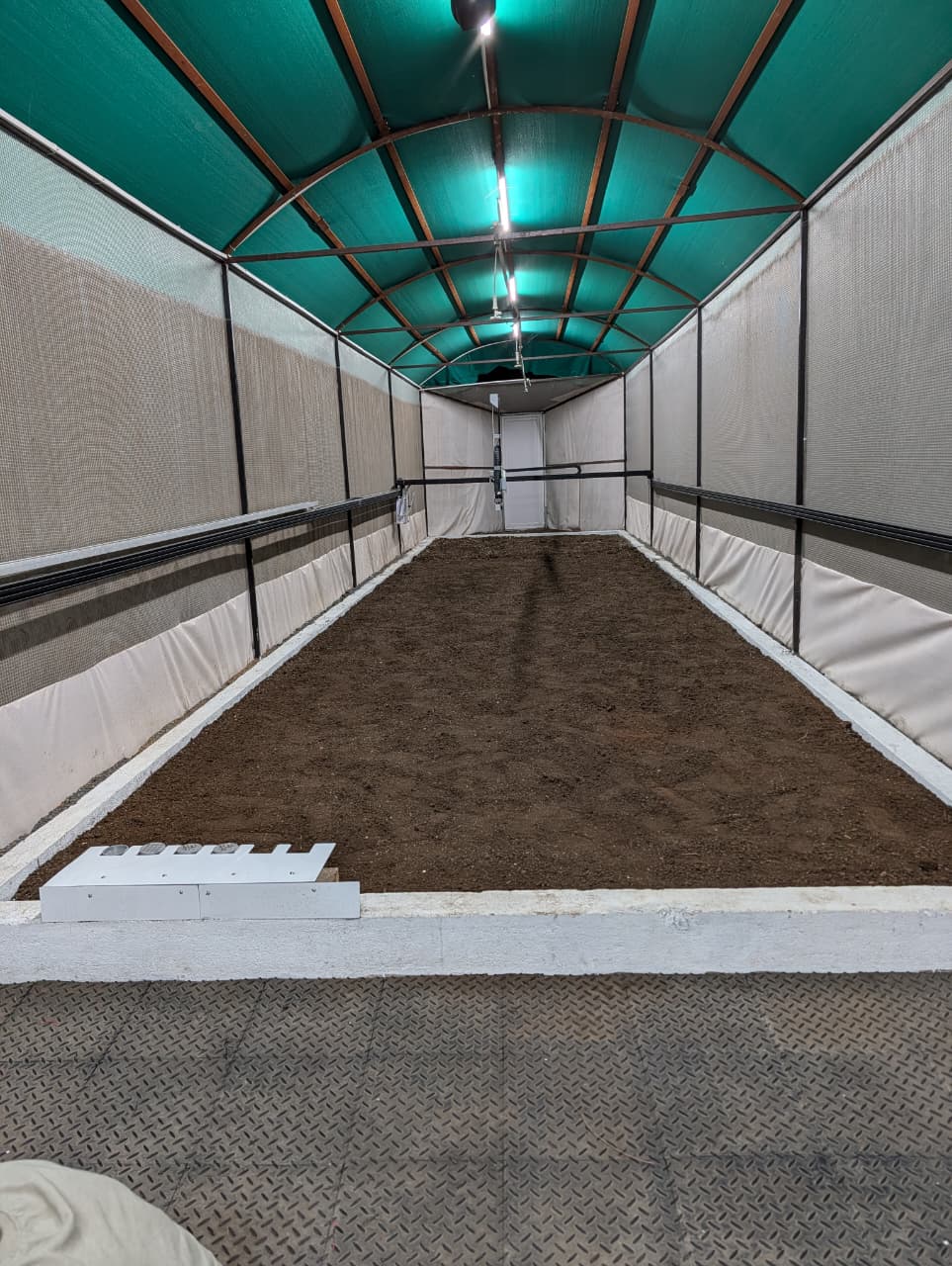
My system — which I call EDENIX — is an extended-bed Genesis 1.2 running on an 8800mm × 2400mm × 1000mm raised bed. The gantry covers roughly 8.8 meters of track length, which is well beyond the standard kit dimensions. Hardware is Arduino Mega + RAMPS 1.4 with DRV8825 stepper drivers, NEMA 17 motors
The full system is built from locally sourced and fabricated components here in India — no imported FarmBot kit. Everything from the tracks to the raised bed structure was designed and assembled ground-up.
What’s Working
- Automated seeding sequences using Lua — I wrote a batch planting script that mounts the seeder once and plants an entire group of 24+ seeds in a single run using
get_group(). - Automated weeding with the standard weeder tool, also Lua-driven.
- Live camera feed from an IP camera streamed through go2rtc into the FarmBot webcam widget.
- The full web app connected and operational via FarmBot cloud.
Challenges I Solved (Might Help Others)
A few hard-won lessons from this build:
- The D1 diode problem on RAMPS 1.4 — If you’re using an external 24V power supply, the D1 diode on RAMPS feeds that voltage straight into the Arduino Mega’s onboard regulator. This will kill replacement Arduinos one after another until you physically remove D1. Took me several dead boards to figure this out.
- Z-axis stalling — My Z-axis was stalling during operation. Root cause was insufficient motor current — the DRV8825 Vref was set at 0.7V, which wasn’t enough for the extended Z leadscrew. Corrected it to 0.85V and the problem disappeared.
- Motor resonance at certain speeds — On an 8.8m bed, you’ll hit resonance frequencies that shorter beds never encounter. I had to tune homing speeds and acceleration curves specifically for the extended track length.
- Lua scripting gotchas — If you’re writing Lua sequences: never use
safe_z = falsein table syntax (causes a fatal error), always use explicit table syntax formove_absolute, and callsafe_z()with no arguments to get the configured safe height.
What’s Next
I’m actively working on the software side — building a customised version of the FarmBot web app with features targeted at Indian agricultural conditions. I’m also working with Krishi Vigyan Kendras (agricultural extension centres) here in India to bring this technology to farmers and researchers.
I’d love to connect with anyone else in India (or South/Southeast Asia) who’s building or interested in FarmBot technology. Happy to share more technical details about the extended-bed build, the Lua sequences, or any of the hardware debugging.
You can reach me at info@kalpyantra.ai or find us at (https://kalpyantra.ai).
Looking forward to being part of this community. will keep posting updates
— M.J. Sidatar
Gujarat, India